
Surgical treatment may be considered when symptoms are more severe, persistent, or not adequately controlled with medications. These procedures aim to remove or reduce the part of the prostate that is obstructing urine flow.
Common surgical approaches include transurethral resection of the prostate (TURP), holmium laser enucleation of the prostate (HoLEP), and thulium laser enucleation of the prostate (ThuLEP).
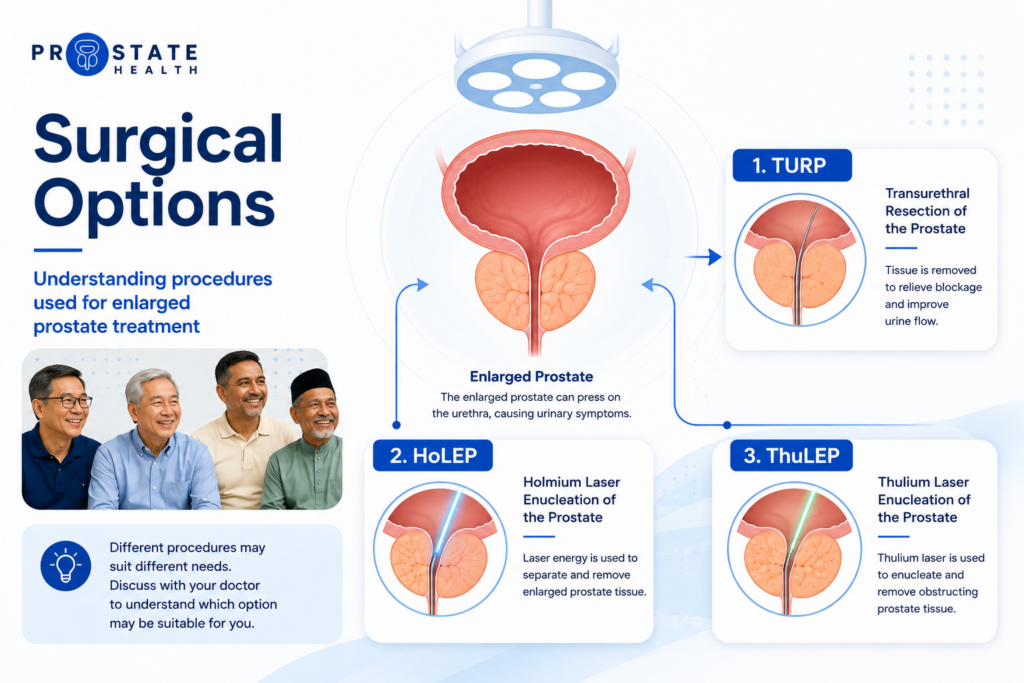
Each technique works differently but shares a common goal of relieving obstruction and improving urinary flow. The choice of procedure depends on several factors, including prostate size, available technology, and the experience of the treating team.
Surgical treatments are generally more definitive compared to medications, and they may offer longer-lasting symptom relief. However, they also involve considerations such as recovery time and potential risks, which should be discussed with a healthcare professional.