
🩺 Enlarged Prostate (BPH)
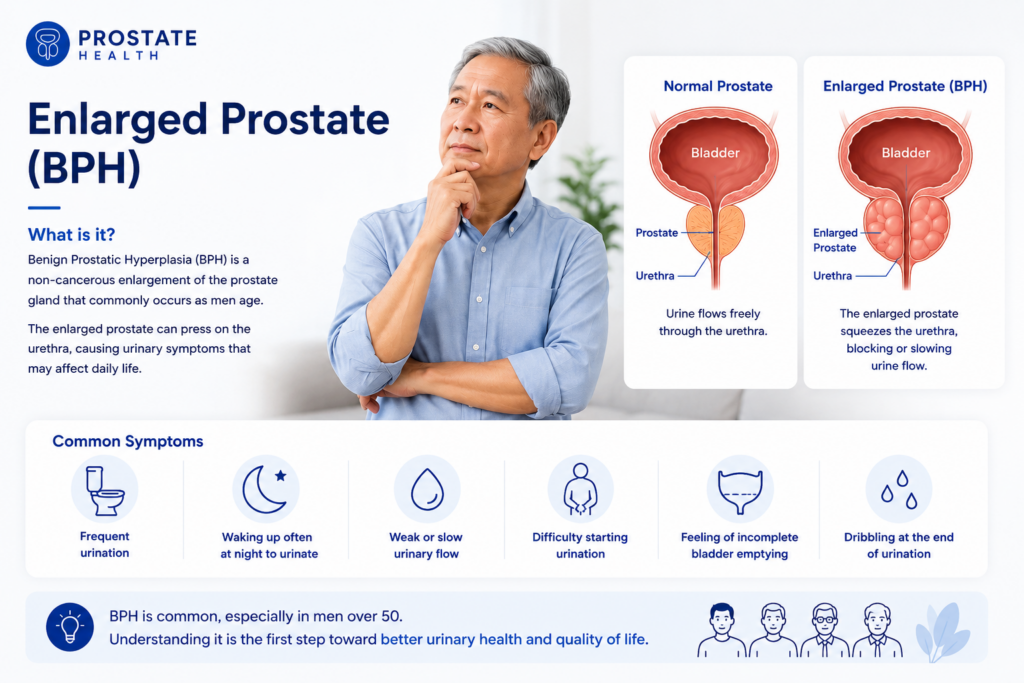
What is BPH?
Benign prostatic hyperplasia (BPH), commonly referred to as an enlarged prostate, is one of the most common conditions affecting men as they age. The prostate gland gradually increases in size over time, which may place pressure on the urethra and affect the flow of urine.
This enlargement is non-cancerous, but it can lead to a range of urinary symptoms. These may include frequent urination, especially at night, a weaker urine stream, difficulty starting urination, and a sensation of incomplete bladder emptying.
The severity of symptoms can vary. Some individuals may experience only mild changes, while others may find that symptoms begin to interfere with daily activities, sleep, and overall quality of life.
BPH develops gradually, and its progression differs from person to person. While the condition itself is not life-threatening, the impact on bladder function and comfort may increase over time if left unaddressed.
Management options depend on the severity of symptoms and how much they affect daily life. In some cases, lifestyle adjustments or medications may be sufficient. In other situations, minimally invasive procedures or surgical treatments may be considered to relieve obstruction and improve urinary flow.
Understanding BPH helps provide context to common urinary symptoms and allows for more informed discussions about possible next steps.